AI State of the Union: 2026 Strategy
In 2026, Artificial Intelligence has moved past the "hype cycle" of simple chatbots and entered a phase of deep industrial and social integration. This report breaks down the core meaning, evolving goals, and the strategic SWOT landscape of AI as it stands today.
"5 min read"
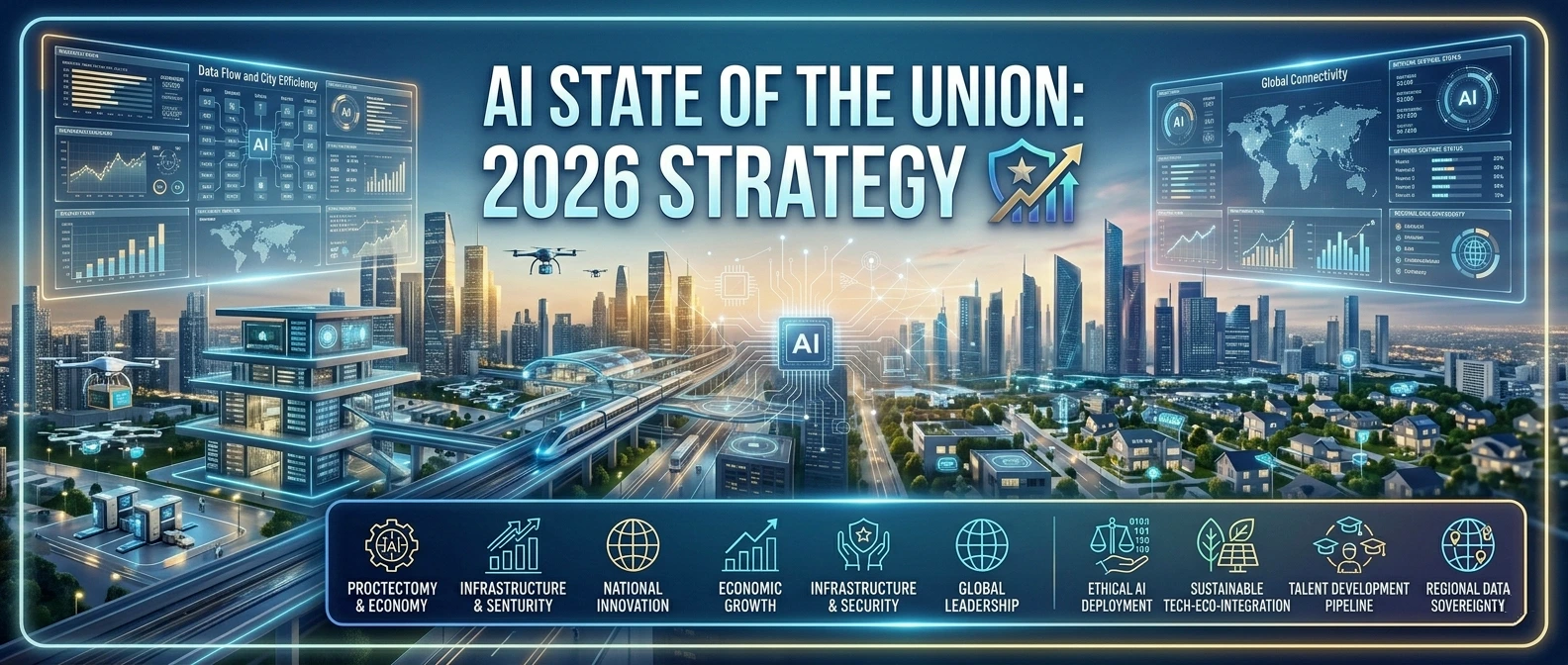
Meaning: Beyond Automation
At its core, Artificial Intelligence (AI) is the capability of a machine to perform tasks that traditionally require human intelligence - such as reasoning, learning from experience, and making complex decisions. In 2026, the definition has shifted from "Generative AI" (creating content) to "Agentic AI". We no longer view AI as just a tool we prompt; we view it as a digital colleague capable of planning, using software, and executing multi-step workflows with minimal supervision.
The Primary Goal
The objectives of AI development in 2026 focus on three distinct pillars:
Hyper-Productivity: Automating not just "tasks," but entire "processes" - from real-time supply chain adjustments to autonomous scientific discovery in medicine and physics.
Personalization at Scale: Delivering individual experiences in education and healthcare that adapt to a person’s unique needs in real-time.
Artificial General Intelligence (AGI) Pursuit: While true human-level AGI remains a "north star," the goal is to move models toward cross-domain reasoning rather than being limited to a single task like "writing" or "coding."
SWOT Analysis: The 2026
| Strengths | Weaknesses |
| Speed & Scale: AI processes petabytes of data in seconds, identifying patterns invisible to humans. | Energy Consumption: The "compute tax" is high; AI data centers require massive power and water cooling. |
| Continuous Learning: Systems now adapt to new data without needing a full "retraining" cycle. | Explainability: Many advanced models remain "black boxes," making it hard to audit why a decision was made. |
| Cost Efficiency: Once deployed, the marginal cost of an AI agent performing a task is near zero. | Data Dependency: AI is only as good as the data it's fed; "garbage in, garbage out" remains a literal law. |
| Opportunities | Threats |
| Sovereign AI: Countries and companies are building "local" AI stacks to ensure data privacy and national security. | AI-Powered Cybercrime: Hackers use autonomous agents to launch 24/7, adaptive phishing and malware attacks. |
| Medical Breakthroughs: AI is currently predicting protein folding and drug interactions at 10x the speed of 2023. | Job Displacement: Routine cognitive roles (e.g., basic data entry, entry-level legal research) face high risk. |
| Human-AI Collaboration: The rise of the "Manager of Agents" role, where humans steer AI-led teams. | Model Collapse: If AI is trained primarily on other AI-generated content, the quality of intelligence can degrade over time. |
Conclusion: The 2026 Outlook
We have reached an "inflection point". AI is no longer a separate department; it is the operating system for modern business. The focus for the remainder of 2026 is Governance. Organizations that can balance the raw power of AI with ethical guardrails and transparent data practices will lead the market, while those who "agent-wash" without a clear strategy risk significant operational failure.
Report Note: Success in 2026 is measured not by how many AI tools you use, but by how well those tools are integrated into a human-led strategy.